
 Welcome to Cambridge Education College
Health, Fitness & Wellbeing • 3 min read
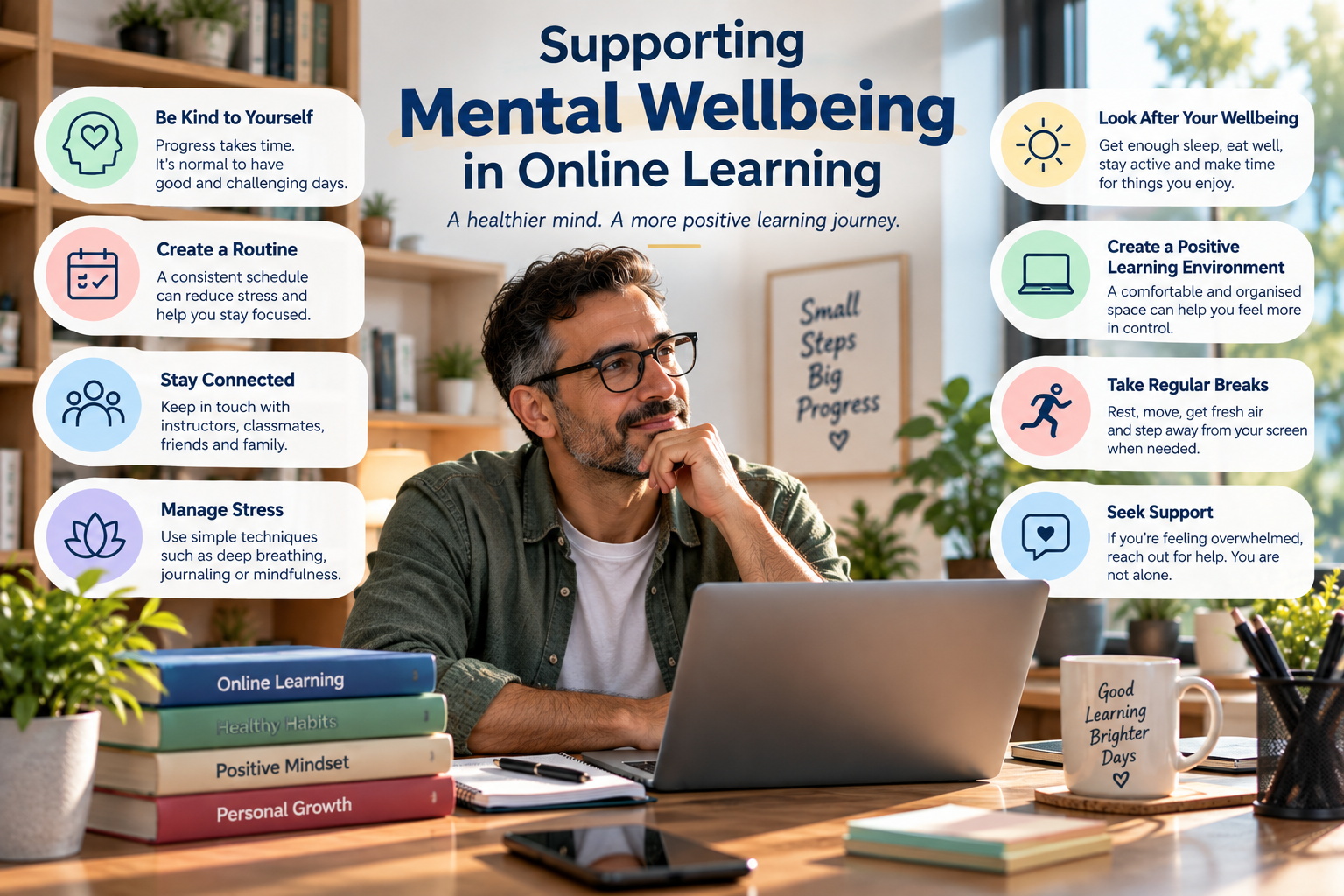
Online learning offers flexibility, accessibility, and the freedom to develop your knowledge and professional skills from wherever you are. However, balancing learning with work, family responsibilities, and everyday life can sometimes feel demanding.
Mental wellbeing is therefore an important part of a positive and sustainable online learning experience.
At Cambridge Education College, we believe that professional development is not simply about completing assignments or progressing through a programme. Creating healthy routines, maintaining social connections, managing pressure, and knowing when to seek support can all contribute to a more balanced learning journey.
One of the advantages of online learning is flexibility, but flexibility still benefits from structure.
Try to establish regular times for learning while considering your work, family, and personal commitments. Breaking larger tasks into smaller, manageable steps can make your workload feel more achievable.
Your routine does not need to be perfect or identical every day. The aim is to create enough structure to help you stay organised without making your schedule unnecessarily stressful.
Studying online does not have to mean studying alone.
Communication with instructors and fellow learners can help create a stronger sense of connection. Participating in discussions, asking questions, exchanging ideas, and taking part in online activities can make the learning experience more engaging.
Connections outside learning matter too. Spending time with family and friends and maintaining meaningful social relationships can provide an important balance to study and work.
Sometimes, simply talking to someone can help put a difficult day into perspective.
Concentration has limits.
Trying to study continuously for hours may leave you feeling tired and less focused. Short breaks can give your mind an opportunity to reset.
Stand up and move around.
Step outside for some fresh air.
Prepare a drink.
Stretch.
Listen to music.
Or simply spend a few minutes away from your screen.
Taking a break is not necessarily lost learning time. Returning with greater concentration may make the next study period more productive.
Deadlines, assignments, work responsibilities, and personal commitments can sometimes happen at the same time.
When everything feels urgent, identify what actually needs your attention first.
Write down your tasks.
Separate larger projects into smaller actions.
Prioritise important deadlines.
Focus on one manageable step at a time.
If you do not understand an assignment or programme requirement, asking for clarification early can prevent unnecessary stress later.
You do not need to solve everything at once.
Progress can begin with one small, clear next step.
Mental and physical wellbeing are closely connected to everyday routines.
Regular movement, sufficient rest, balanced meals, hydration, and time away from screens can all form part of a healthier learning routine.
Sleep is particularly important. When possible, create some separation between studying and going to bed rather than allowing assignments, messages, and digital activity to continue until the final moments of your day.
Your life should not become only work and study.
Make time for activities you enjoy and for moments when you are not trying to be productive.
Not every day will be equally productive.
Some days you may complete several tasks and feel highly motivated. On other days, work, family responsibilities, tiredness, or unexpected circumstances may affect your plans.
That does not mean your learning journey has stopped.
Instead of comparing every day with your most productive day—or comparing your progress with other learners—focus on steady development over time.
Learning is a process, and progress does not always happen at the same pace.
Your surroundings can influence how you feel while studying.
Where possible, choose a comfortable and organised space with suitable lighting and fewer unnecessary distractions.
You do not need a perfect home office. Even small changes—organising your desk, reducing notifications, preparing what you need before starting, or keeping your learning area tidy—can help create a clearer separation between study and personal time.
Everyone experiences pressure from time to time, but persistent or overwhelming distress should not simply be ignored.
If difficulties begin significantly affecting your daily life, sleep, relationships, work, or ability to function, consider speaking with an appropriately qualified healthcare or mental-health professional.
Seeking appropriate support when you need it is an important part of looking after your wellbeing.
At Cambridge Education College, our online vocational and professional programmes are designed to provide learners with flexibility while supporting continued personal and professional development.
A successful learning journey is not about being productive every minute.
It is about finding a sustainable approach that allows learning, work, relationships, rest, and personal wellbeing to coexist.
Create a routine.
Stay connected.
Take breaks.
Manage your workload realistically.
Look after yourself.
And ask for support when you need it.
A healthier mind can support a more positive and sustainable learning journey.
 Programs